Politics,Climate Change and Sundry issues

Politics,Climate Change and Sundry issues
for website listing my blogs : http://winstonclosepolitics.com

Sunday, 31 August 2014

Arms runs likely to be step to deeper Australian role against Islamic State

Arms runs likely to be step to deeper Australian role against Islamic State


ABBOTT WARMONGERING


Arms runs likely to be step to deeper Australian role against Islamic State


Australian Defence Force chief Air Chief Marshal Mark Binskin and Prime Minister Tony Abbott face the media on Sunday.
AAP/Lukas Coch


When Tony Abbott says he doesn’t want to get ahead of himself on
Australia’s Middle East commitment – specifically about joining air
strikes – what he means is that he can’t get ahead of Barack Obama.


The government announced on Sunday that Australia would help
transport stores of military equipment, including arms and munitions, to
Kurdish fighters in Iraq.


This was at the Americans' request as part of a multi-national effort
that also included the United Kingdom, Canada, France and Italy. The
arms, sourced from eastern Europe, will be handed over on the ground.


Abbott told a news conference, at which he was flanked by the
Australian Defence Force chief Air Chief Marshal Mark Binskin, that
cabinet’s national security committee had taken “a decision in
principle” and the cabinet supported that decision.


Asked about timing, Abbott said it was taken to the cabinet earlier
than cabinet’s meeting a week ago. The request was made “in general
terms some time ago [and] crystallised into specificity a few days ago”.


Apparently a general request was put out to relevant countries around
mid-August: eastern European countries were asked for weapons and the
others for transportation assistance.


It can be presumed that the next steps in the escalation of Australia’s role are already in the pipeline.


Just as the weapons airlift was briefed by the government to the News
Corp Sunday papers before being announced, so the next stage was
flagged in Saturday’s Australian.


The Australian’s foreign editor Greg Sheridan, who is close to
Abbott, wrote that the government was considering deploying SAS
soldiers, Super Hornet fighters and sophisticated airborne early warning
and control aircraft as part of the fight against Islamic State.


Notably, Sheridan said that the SAS special forces were “not
conventional combat ground forces” and so their deployment would not
breach the government’s commitment not to put combat troops on the
ground.


This followed Defence Minister David Johnston last week saying, when
asked on the ABC’s Lateline whether the Prime Minister’s promise of no
combat troops included the SAS: “Well, no combat troops on the ground.
If you define the SAS as combat troops, that’s the answer”.


When Abbott on Sunday was asked to guarantee no special forces would be sent, he did not do so.


The ground component would be significant - the special forces' part
would be defined as activities that help enable the air strikes and
perhaps provide some sort of training for the Kurdish fighters.


But the course and timing of events depend on American decisions. The
US wants the Iraqis to form an inclusive government (deadline September
10 when the new prime minister takes over) and is also putting pressure
on neighbouring countries to ensure they don’t undermine the efforts
against Islamic State.


Developments, such as how things work out with the new Iraqi
administration, could always blow things off course. But barring that,
the US activity can be expected to escalate and Australia’s involvement
would be set to deepen significantly.


With parliament entering the second week of its sitting fortnight, Sunday’s announcement will change the political emphasis.


The battle over the budget won’t disappear but it will be somewhat relegated in the news.


Quite apart from the substance of this very serious situation with
Islamic State, Team Abbott is attuned to the political implications
domestically.


It gives the Prime Minister an opportunity to rise above the
day-to-day fray. So far the national security issue has worked to his
advantage.


He is linking what happens far away to Australia’s backyard. “While
we understandably shrink from reaching out to these conflicts, the truth
is that these conflicts reach out to us,” he said, pointing to some 60
Australians involved with terrorist groups in the Middle East and
another 100 actively supporting them from here.


Abbott also specifically tied in killings overseas to the danger of
terrorism at home. “If it’s right [for terrorists] to kill in the name
of god in Iraq, there is no reason to think that the same people won’t
do likewise, if they get the chance elsewhere, including in Australia,”
he said.


“The people who are active in the terrorist groups in northern Iraq
and elsewhere hate us as much as they hate the people that they are
currently attacking.


“They hate us not for what we have done, they hate us for who we are and for what we are.”


So far, the threat level hasn’t been raised in Australia, although in
Britain on Friday it was raised from substantial to severe.


Asked whether Australian action increased the threat of terrorism
inside Australia Abbott noted ASIO chief David Irvine’s opinion last
week that “in his professional judgement [there was] no specific
correlation between what the Australian government might do in the
Middle East and domestic terrorist threats”.


Abbot was dismissive of calls from the Greens and independent MP
Andrew Wilkie that parliament should have a role in what Australia does
in Iraq.


“This government’s intention is to abide by the standard conventions
which have always been applied to the deployment of Australian military
forces: consideration by the national security committee of the cabinet,
consideration of the cabinet, and consultation with the opposition.”


For its part, the opposition has embraced the latest step and is
likely to do the same with the next. Deputy Labor leader Tanya Plibersek
on Sunday was at pains to distinguish the current situation from that
prevailing in the “disaster” of 2003 when Australia joined the Iraq
mission.


It may get more awkward for Shorten to stick close to Abbott as the
action escalates, but he knows that to do anything else will mean the
government will be quick to make Labor and him the issue.


Listen to the latest Politics with Michelle Grattan podcast, with Age Discrimination Commissioner Susan Ryan, here.


Saturday, 30 August 2014

The Meaning of Terrorism

The Meaning of Terrorism


The Meaning of Terrorism


Politics is a language game: in any given context, who gets
what, when and how invariably depends on how things with no ‘essential’
or ‘naturally given’ meaning come to be defined, categorised and named.
Briefly in Botswana for talks, and to learn more about its uniquely
African-style democracy, my senses quickly tune in to the local
political vernaculars. Fascinated, scribbling field notes, I share good
conversations, watch television and paw through the lively local
newspapers, where shortly after my arrival in Gaborone I come across
reports of a remarkable speech by a government minister, on the subject
of terrorism.


Gaborone, capital city of Botswana
Botswana Tourism Organisation

Click to enlarge


Among the few successful and sophisticated democracies on the African
continent, Botswana is in the early throes of an exceptionally feverish
general election campaign. The great day of choosing is less than two
months away, and some observers are predicting heaps of disaffected
protest voting, and even a hung parliament. If that happens, it would
signal the end of an unbroken half-century of rule by the dominant
Botswana Democratic Party (BDP) first led by Sir Seretse Khama, and now
by his son, Ian Seretse Khama. Like the ANC and other African
counterparts, the BDP is a well-oiled political machine. Well-entrenched
patronage and an antiquated first-past-the-post voting system
(inherited from the British) work firmly in its favour. Yet the current
leadership of the BDP shows signs of being rattled. Unsurprisingly,
organised attempts to trope their way to yet another victory are being
rolled out.


Assistant Minister of Local Government and Rural Development, Botlogile Tshireletso
Daily News (Gaborone)

Click to enlarge


Which brings me to Gaborone’s Daily News (26th August). The government-funded newspaper leads with Ms Botlogile Tshireletso,
Assistant Minister of Local Government and Rural Development, who
trumpets the way her Botswana government is ‘working around the clock to
prevent acts of terrorism’. Every citizen of Botswana, she says, should
‘guard themselves so that they do not become victims’. Addressing a
local public meeting (known here as a kgotla council) in the
central town of Mahalapye, her own turf, the good government minister
goes on to define ‘acts of terrorism’ as ‘human trafficking, illicit
fire arms and drug trafficking’. For good measure, she throws in
‘brothel services’ as well.


By global standards, her definition is generous, to put it mildly.
But wait. Much more is to come, not least because Ms Tshireletso shies
away from defining with precision her pet term ‘terrorism’. If the
minister had done so, she would’ve been forced to admit that the word
terrorism, strictly defined, once referred to any attempted exercise of
power by a few over the many using terror: threats of violence designed
to frighten victims out of their wits, into submission.


Ms Tshireletso declines such semantic niceties, for her way of
playing high-level politics with language is typical of our times.
Especially since September 2011, pushed along by successive American
presidents and their coalitions of willing allies, the nine-letter
signifier has become a weasel word. Terrorism has come to mean whatever
governments and their spokespeople choose it to mean. Several years ago,
for a brief period, their public usage of the word seemed to wane. But
for various reasons, including the will to win elections, Muslim baiting
and the disastrous uncivil war now raging in the Middle East, the word
is making a global comeback, with a vengeance, even here in peaceful and
democratic Botswana.


Democrats everywhere should be worried, simply because the spreading
talk of terrorism nurtures strangely paradoxical effects. For more than a
decade, a word that rightly describes a profoundly anti-democratic
phenomenon has itself become an anti-democratic word. A rough equivalent
of the word ‘communism’ a generation ago, the term terrorism has weasel
qualities, a signifier with predatory intentions.


Just like the weasel that sucks dry the eggs of other creatures, the
weasel word terrorism robs life from meaningful political discourse.
When wielded indiscriminately, it puts an end to conversations. It
suspends doubt and smacks of self-righteous certainty. Accused of
terrorism, individuals and whole groups of people should shudder.
They’re in trouble. Finger pointing and ostracism will certainly come
their way. Arbitrary arrest, imprisonment and death by drone violence
may be their fate.


Most remarkable in this context is the way the weasel word terrorism
colonises areas of life in which it doesn’t belong. Its obscene beauty,
we could say, lies in its combined precision and vagueness: the word
masters the art of equivocation. It’s a living contradiction that
refuses to be contradicted; anyone who disagrees with its use incurs the
suspicion of being unreasonable, merely because they dissent. The word
is a friend of tergiversation. It has an unlimited capacity to charm its
doubters, magnetise its supporters, to justify what might otherwise not
be justifiable, to do exceptional things (impose states of emergency,
raise airport security levels to ‘severe’, torture, imprison with trial)
simply by calling things by their improper name.


In her Mahalapye speech, Ms Tshireletso shows how it’s done, in such a
stylishly perverse way that even clever weasels would be impressed. Her
aim is to win an election by redefining Botswana as a target of
terrorism. This she does by testing the elasticity of an
already-stretched word, pushing its hollowed-out meaning to the limits
of intelligibility. Never mind that Botswana is a remarkably civil
country, with very low crime rates by global standards. Disregard the
fact that it has no history of military meddling in civil affairs or
cooked-up tribal violence. Forget comparisons with the criminal
butchery, enforced re-settlements and thuggish gangs (chipangano)
of neighbouring Zimbabwe. The citizens of Botswana, the good minister
insists, must remember not to delude themselves. They need to be
vigilant. Caution is a duty, in every situation, especially when
‘looking for employment opportunities’.


Did Ms Tshireletso mean that citizens should be on the lookout for
terrorists lurking within government departments, or church-based NGOs,
or municipal schools, or cricket, football and other sporting leagues?
She didn’t explain. But what she did say is that the republic of
Botswana sits on soil riddled with tunnels of terrorism. When citizens
take steps to ‘further their education’, they should stay fully alert.
Their terrorism detectors, she added, must at all times be switched on,
even when ‘looking for marriage partners through the use of social
media’.


Ms Tshireletso didn’t exactly pronounce a prohibition on digital
dating but that, absurdly, is what her speech implied. That’s the way
weasel words work: they destroy common sense by weaseling their way into
situations where most definitely they don’t belong. Since the Internet
is thick with terrorist thieves, the minister hinted, new questions
should be tabled, and taken seriously: do citizens who meet and
communicate online unwittingly hold hands with terrorists? Is a comment
on Facebook potentially an act of terrorism? Dancing and petting its
blind accomplice? Kissing and making love its consummation?


Predictably, the Daily News report cuts out at this point,
leaving readers in the arms of a weasel word that tempts their political
imaginations to run wild, into the land of nonsense. Can BDP talk of
terrorism help win an election, as it did for George W. Bush in the
United States in 2004? We’re going to see. Nothing is certain, which is
how a fair and free election should be. During the next few weeks, much
will depend on whether discerning Botswana citizens see that the
slippery language of terrorism can fall into the wrong hands, misused by
the self-appointed opponents of terrorism to weasel their way into
citizens’ lives, to pull wool over their eyes, in effect terrorising
them softly into submission, so confirming the maxim that in politics
words are just as powerful as votes, or money, or guns.


Don't panic about wages, this isn't the '70s - The Drum (Australian Broadcasting Corporation)

Don't panic about wages, this isn't the '70s - The Drum (Australian Broadcasting Corporation)

Don't panic about wages, this isn't the '70s


Posted


This isn't the 1970s and real wages
aren't exploding, so the business community will have a tough time
calling for even lower pay for employees, writes Mike Steketee.
In
January, Employment Minister Eric Abetz warned of a "wages explosion"
if employers and unions did not take account of the cost to the economy
of the agreements they struck.


In a speech
that received prominent media coverage, he evoked the bad old pre-Hawke
government days, when large wage increases won by the metal trades
union flowed through to other parts of the economy and priced employees
out of jobs.


Paul Keating as treasurer summed up the consequences
in his characteristically forthright manner by accusing then
metalworkers union boss (and later senator) George Campbell of carrying
the corpses of 100,000 unemployed around his neck.


Abetz lamented
that some unions saw the present system as "an opportunity to simply
ratchet up wages to further unsustainable levels", while many employers
adopted a strategy of harm minimisation, rather than improving their
competitive position. He added portentously: "If the system is not
driving the parties to act more responsibly, then it needs to be
reformed so that it does."


That suggested that the Coalition,
together with business, still hankers for industrial relations reform,
even if political experience, to wit, its loss of government in 2007,
dictates that it treads very warily down this path. (It has put any
substantial changes off to a second term, following a report from the
Productivity Commission.)


The problem with Abetz's comments is
that they came hard up against reality. There has been no wages
explosion, nor is there any prospect of one. Another reality is that the
industrial relations system is one of the least of our economic
problems.


Three weeks after his address, the Australian Bureau of Statistics released figures showing
that wages grew by 2.6 per cent (seasonally adjusted) over 2013 - the
smallest increase for the wage price index in the 17 years it has been
compiled.


The latest figures,
extending to the June quarter this year, show the slow wages growth
continuing, with the annual figure remaining at 2.6 per cent. With
inflation, as measured by the CPI, running at an annual rate of 3 per cent, that means real wages are falling.


No sign of a wages explosion there.

In
truth, the situation could not be more different to that of the 1970s
and early 1980s, when the cost of living and similar pay for similar
work were important ingredients in wage determinations by the
Conciliation and Arbitration Commission. These days the labour market
responds primarily to the economic conditions faced by employers. The
small increase in wages reflects the low growth in demand for the goods
and services that businesses produce.


This is confirmed by the
Reserve Bank, which expects wages to continue growing at a relatively
low pace in the September quarter.


"Wage growth in the mining and
business services industries slowed particularly sharply over the past
two years ... consistent with a larger increase in estimated
unemployment for workers from these industries," it says in its latest statement on monetary policy.


The
RBA also points to other costs to business coming down. The exchange
rate has fallen and labour costs are falling slightly against those of
many of Australia's major trading partners. Labour productivity had been
growing faster than the average over the last decade. And it adds that
time lost to industrial disputes is well below its 10-year average.


It
is a quite different picture to that regularly portrayed by employer
groups: that Australia is too expensive a country to do business.


As
for comparisons with three or four decades ago, there is none.
Economist Saul Eslake told me this week that profits as a share of
national income fell as low as 17 per cent during the 1970s. Now they
are at about 27.5 per cent, slightly down from their peak in 2007, just
before the global financial crisis.


Businesses can sustain high
wage increases if they are matched by rises in productivity - that is,
improved work practices that result in higher output per worker. In the
1970s and 1980s, wage increases ran far ahead of inflation and
productivity. Now they are falling behind them.


Working days lost to industrial disputes totalled 88,600
in the year to the end of March. If that sounds high, you must be
either young or have forgotten the glory days of the union movement. In
1985, when the ABS first started collecting these statistics, working
days lost totalled almost 1.3 million and three years later were more than 1.6 million.


The
business community was strident its opposition to the Fair Work Act,
implemented by the Rudd government in 2009 to replace John Howard's Work
Choices. Their concern was that unions would receive a new lease of
life and press unsustainable wage claims.


It didn't happen.

One
obvious reason is that, though the Fair Work Act did tilt the balance
back towards unions to some degree, they are a shadow of their former
selves. In August last year, 17 per cent of Australian employees were trade union members in their main jobs. In 1992 the figure was 43 per cent for males and 35 per cent for females.


Earlier
legislative changes did lead to fundamental changes in the operations
of the labour market. They started with the introduction of enterprise
bargaining by the Keating government. The Howard government extended the
decentralisation of the system, and, notwithstanding frequent claims of
a return to the pre-Keating era, most of the changes were maintained by
the Rudd and Gillard governments.


In our conversation this week,
Eslake said that, given issues to do mainly with timing, caution was
needed in using statistics on wages and productivity to draw conclusions
about the effect of changes to the industrial relations system. But he
said:


Tentatively you could argue that the wages
system that Australia now has has not been a barrier to wages growth
moving in line with changes in labour market conditions. The changes to
the Fair Work Act made by the previous Labor government were never
really about aggregate wages growth anyway.
That is,
all the signs are that stagnant or falling real wages are a response to
deteriorating economic conditions. Employers facing a slowdown in demand
for their products and services are not being forced to grant wage
increases either by union muscle or award increases handed down from on
high by the Conciliation and Arbitration Commission. Unemployment has
been rising but would have gone up faster if real wages also were
increasing significantly.


So what could businesses possibly have
to complain about? Well, amongst other things, low demand for their
products and services - itself partly a consequence of employees having
less to spend. Nevertheless, having achieved lower labour costs, they
want to get them lower still.


The Australian Chamber of Commerce and Industry used the release of the wages figures a fortnight ago "to renew calls for workplace relations reform". The costs of employment affected decisions to hire workers, said ACCI's chief operating officer John Osborn.

"This is worsened when those costs become out of step with productivity growth that underpins real wages growth."

Except
that is not what is happening. As vested interests, business and unions
will always want the government to do more to make life easier. Bliss
for business would be a free market for labour, with employers able to
hire and fire as they like, no minimum wages and unions out of the way.


But then we are talking about a market that involves people, rather than cans of baked beans or boatloads of iron ore.

Mike
Steketee is a freelance journalist. He was formerly a columnist and
national affairs editor for The Australian. View his full profile here.


Tuesday, 26 August 2014

Operation Bleedin’ Obvious. - The AIM Network

Operation Bleedin’ Obvious. - The AIM Network


Operation Bleedin’ Obvious.


I’ll keep this short.


Need money?  Here’s some:


Axe the Paid Parental Leave scheme.  Saving $22.2 billion over the forward estimates.


Axe Direct Action.  Saving $2.55 billion over the forward estimates.


Tax voluntary superannuation contributions at the employee’s marginal
tax rate.  Saving $17.8 billion this financial year and $20.7 billion
by 2016-17.


Axe the 50 per cent discount on capital gains tax.  Saving $5.4 billion, climbing to $7.6 billion by 2016-17.


Stop negative gearing.  Saving $4 billion a year.


Cap defence spending at $20 billion a year.  Saving $40 billion over the forward estimates.


Cancel the extra 58 fighter jets.  Saving $12.4 billion.


Reinstate the reporting obligation for car business use.  Saving $1.8 billion.


Axe the company tax cut.  Saving $4 billion a year.


Keep the mining tax.  Revenue of $3.4 billion over the forward estimates.


Increase the top marginal tax rate from 45 to 47 per cent and apply
it to all earnings over $150,000 rather than the existing threshold of
$180,000.  Revenue of $8.1bn over four years.


Introduce a Financial Transactions Tax.  I don’t have current figures
but if a 0.05% FTT were collected on Australian “over-the-counter” and
exchange traded market transactions between 2005-06 and 2008-09, it
would have raised $48 billion.


Are we there yet?


Get your hands off our kids, our elderly, our unemployed, our sick and disabled.  Threaten me again and I will get REALLY angry.


Monday, 25 August 2014

The world is turning it's back on our coal, so what's Abbott's plan for our future? - » The Australian Independent Media Network

The world is turning it's back on our coal, so what's Abbott's plan for our future? - » The Australian Independent Media Network


The world is turning it’s back on our coal, so what’s Abbott’s plan for our future?


The coalition are right about one thing, coal is one of Australia’s top earners. Coal brought in roughly AU $46 Billion in the 2013 fiscal year,
and is currently our second biggest export; no matter how much we love
renewables no one could argue that a fall off in demand could be very
damaging for our nations bottom line. But that is exactly what is
happening, our 2013 coal revenue, while still quite robust, was actually
down by 3.6% from 2012. And while some may posit that this is just a
statistical anomaly, (the 5 year growth trend was up 16% until 2012),
not everyone is convinced that what we are seeing isn’t just the first
dip on a imminent free fall decline.

.

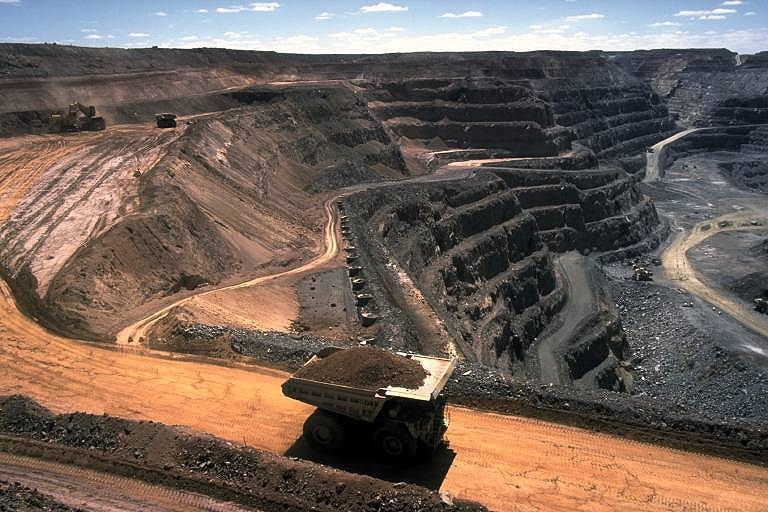
Strip_coal_mining

.

Coking coal contract prices that peaked
in 2011 at $US330 per tonne, have now dropped to below $US120 a tonne,
which is threateningly close to the wrong side of a break even price.
So, with demand falling, prices dropping, and mines closing
it’s not totally ridiculous to assume that things could be about to get
worse for those of us heavily invested in the world of coal.

.

The sign posts are
clearly out there for everyone to see. China has banned the building of
new coal plants and has begun dismantling those that it already has, (in fact Chinese experts expect Beijing’s coal use to shrink to less than 10 per cent by 2017). That’s about two and half years away; which is, Mr Abbott, (in case you missed it), alarmingly close.

.

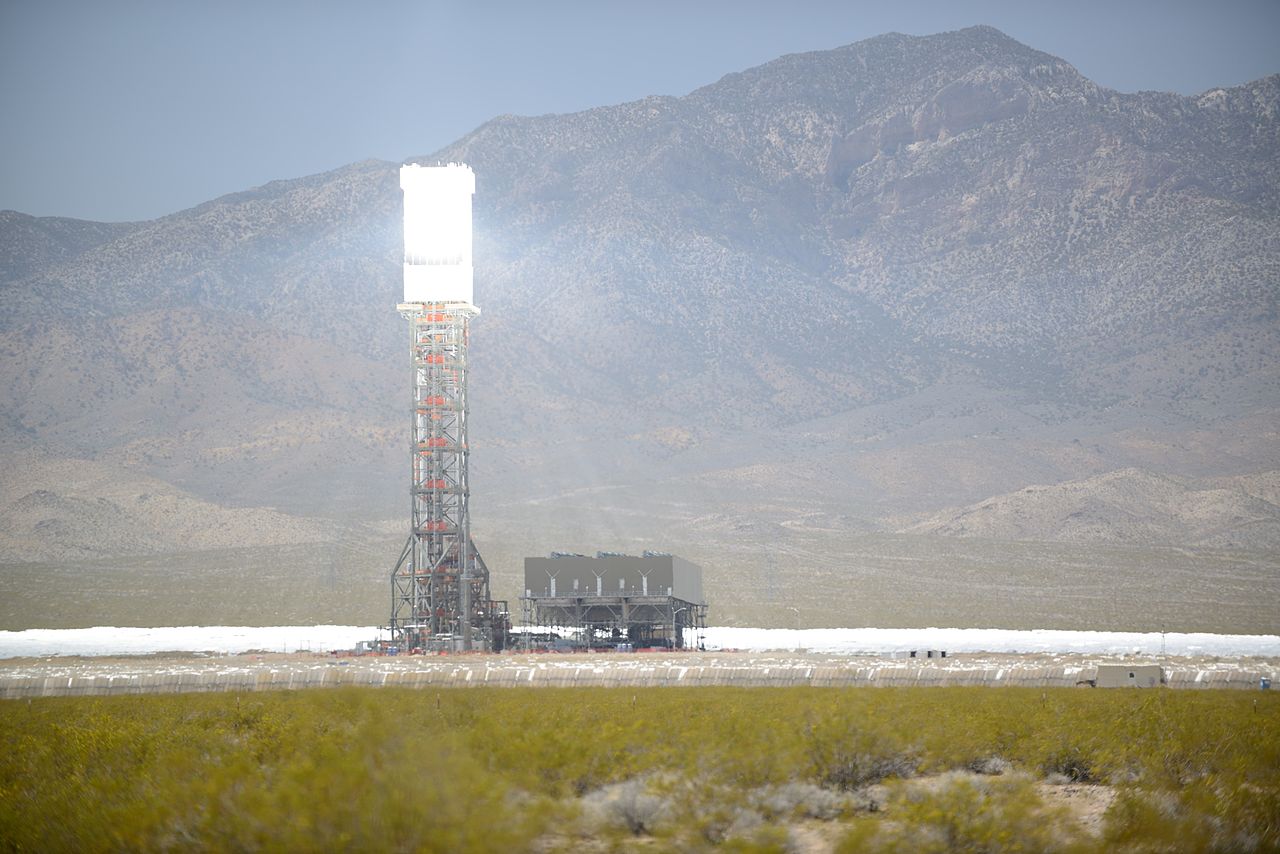
1280px-Ivanpah_Solar_Power_Facility_Online

.

Base load renewables have been advancing at a rapid pace and are set to take over. As of 2011 the Gemasolar project,
located in the Spanish province of Andalucia, (the first
fully-operational commercial-scale solar farm in the world) has provided
base load electricity generation – 24 hours a day.  Since then the
technology has been improving, and new installations like the 394MW Ivanpah Solar Power Facility are being put on drawing boards across the globe.

.

The fact is coal is in its death throws,
the only question is how fast will it die? While the Coalition clearly
think it will stagger on long enough to see out their parliamentary
terms (and secure any post parliamentary perks they may be set to
receive from their big mining buddies), trying to hold back the tide of
change is not likely to be in the best interests of the nation going
forward. We will simply be left behind in the wash up.

.

It is not enough for the government to
scream “budget emergency” and try to cut all of its expenditure on
middle and low income earners. We need a plan for how Australia intends
to earn its living into the future! Coal, no matter how much the
coalition may wish it, is not going to sustain us into the coming
century, (and as things look it may not even sustain us as far as the
next decade).  This is the REAL fiscal emergency, and making pensioners
pay at the doctors, or cutting young folk off the dole is not going to
come even close to addressing this issue.

.

So what are our options? First thing is
to look at what we already do well. Education is our third highest
export earner, (after iron ore and coal), and unlike iron ore or coal
(which we export as raw commodities) the education sector is one in
which we do a high level of value adding. It is a sector into which we
could expand exponentially. We have so many advantages, from being an
English speaking nation, low crime levels, high degree of cultural
diversity, and of course a quality product.

.

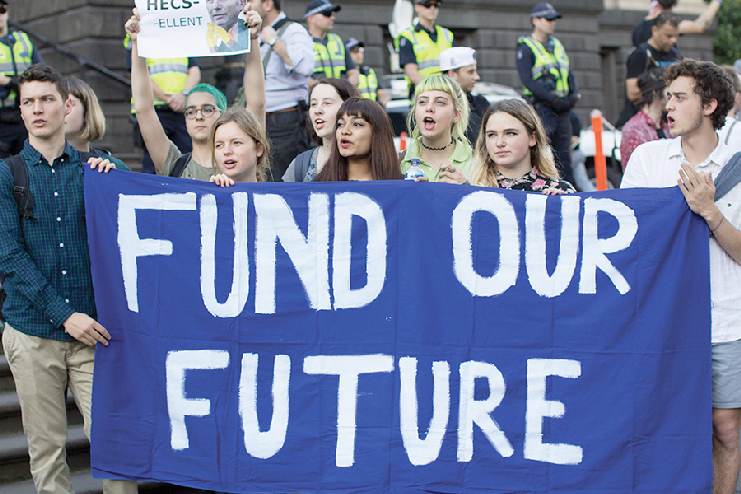
fund our future

.

But what is the coalitions vision?
Cutting course funding and hiking costs for local students is hardly
likely to raise the quality of our educational institutions or their
international standing. We have Christopher Pyne disingenuously citing
the global league tables for universities, ignoring the fact that the
system of academic ranking is weighted heavily toward research institutions, where as our universities are more geared toward teaching and employment outcomes. (Although that said Melbourne University is still ranked in the top 50).

.

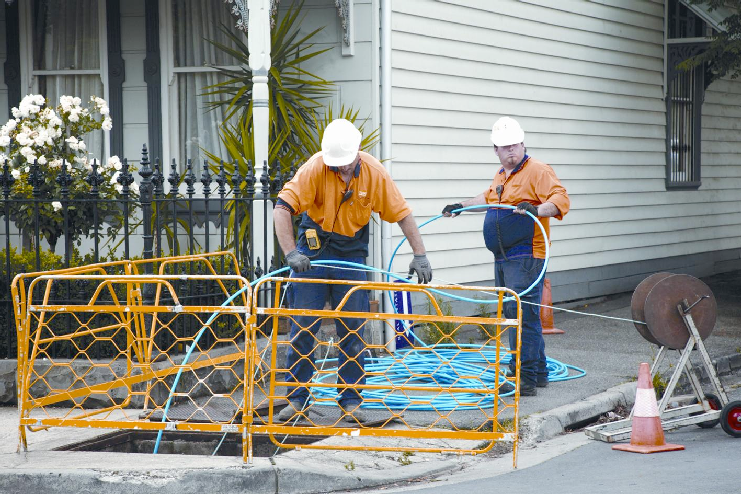
NBN

.

Infrastructure projects that could bring
in off shore students, increase international partnerships, advance
research outcomes and encourage course sharing, like an effective NBN,
have been scuppered with a heedless disregard for their economic
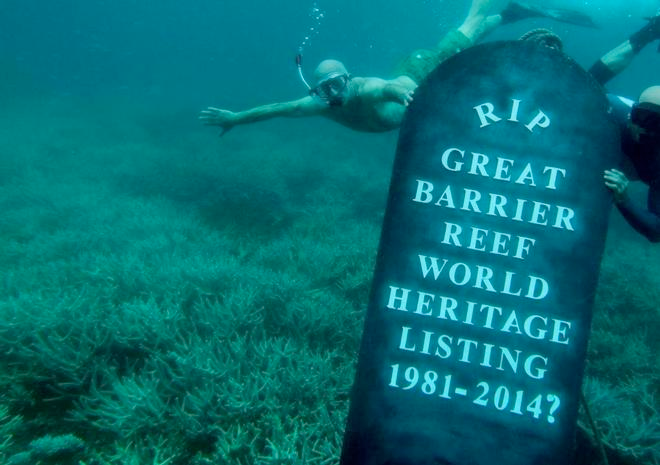
potential or their necessity. Instead we are building more roads and dredging in the Great Barrier reef.

.

RIP REEF

.

Which brings me to number six on our list
of top exports (or number two on our list of non-mining earners),
tourism and travel. Has Greg hunt got rocks in his head? Unlock the
pristine Tasmanian wilderness (one of the states greatest tourism
assets), dredge the great barrier reef, for a coal port? What the hell
is thinking? Tourism’s “brand Australia” is not primarily our cities; we
don’t have the museums and galleries full of cultural treasures like
London, New York, Paris or Berlin. We can not compete with the ancient
ruins of Greece or Rome or Egypt, what we have is pristine wilderness.
We have the reef, the rock, the beaches, the forests, kangaroos, kolas
and the outback. So why would we put our wining hand in the
environmental cross hairs? This is utter madness.

.

Another sector that has a great deal of as yet untapped potential is agriculture,
(when aggregated Australia’s agricultural exports are actually our
third largest earner). Australia is uniquely placed, as an island
continent, to provide high demand heirloom agricultural products, that
are untainted by GMO and GMO pollen drift, (an issue that has seen much of the USA’s agricultural output banned from sale in the EU and other markets across the globe).
It is also an area in which there are huge opportunities for value
adding. And yet what is the government doing? Cashing in on the issuing
licenses for coal seam gas exploration and extraction across swathes of
our best farming land. Recklessly ignoring the issues of ground water
contamination, massive releases of the greenhouse gas methane, and post
extraction land contamination. They are cynically trying to assuage
public opinion by quarantining minute portions of “farmland”, while
actually leaving most of our farms up the proverbial polluted creek.

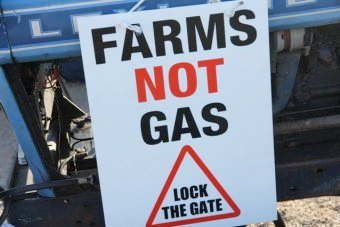
.

FARMS NOT GASS

.

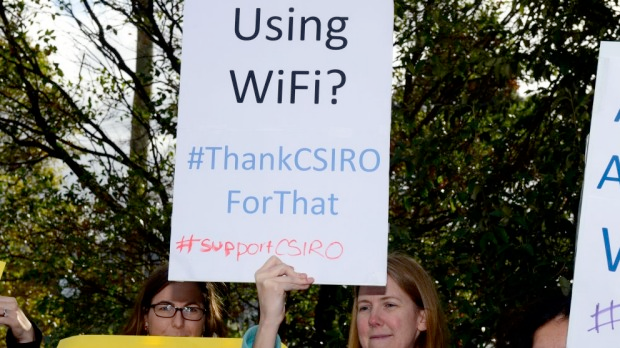
There are so many things we do well.
Scientific research for example; although we don’t even have a science
minister at the moment, and the government is trying desparately to cut
funding to the CSIRO. Biotech, or retooling the automotive industry
toward the burgeoning renewable sector, Australia has a lot of options,
but the government appears to be ignoring them all in favor of throwing
its support behind the coal and broader mining sectors.

.

Untitled 2

.

In spite of Hobbott’s hysterical rhetoric
we don’t have a lot of debt, so is it really prudent to put the brakes
on the broader economy, and pull large amounts of money out of the
system just when are facing seriously declining sales of one of our lead
products?

.

Granted I am not an economist, (although
they seem to get it wrong often as not), but I am someone who has been
in business, and I know this much, if the market for what you are
selling is falling you need to invest in new product lines, and sooner
rather than later. Selling down what you have, not investing in new
product lines, and keeping your fingers crossed in the vain hope your
customers will return is a sure fire recipe for business failure.

.

Just as Christopher Pyne keeps telling us
(vis a vis education), those that invest in their future will earn more
in the long run; but for some reason the government seems incapable of
rationally applying this logic to our nations’ current account. Instead
they are trying to convince us the world is not actually moving
forwards, and we Aussies will be happily shipping coal for years to
come.

.

Maybe they are right, and we will all
ride the wave of coal fired global warming to infinite wealth and
happiness, but just in case that’s does’t work out for us, I for one
would like to know, what’s the plan B? Because simply cutting all
government spending is not going to help us if the bottom suddenly drops
out of the coal market, and we’ve failed to make other plans.


So please, tell us Mr Abbott, where’s the vision, and what is the plan?


Sunday, 24 August 2014

The government needs to make the moral case - The Drum (Australian Broadcasting Corporation)

The government needs to make the moral case - The Drum (Australian Broadcasting Corporation)

The government needs to make the moral case


Updated


While budget policy recommendations such
as the Medicare copayment might be justified by by dry economic
evidence, the Coalition must also convince the public they are justified
in a moral sense. Maxine Montaigne writes.
It is now more than three months since the Abbott government released its first budget.
Amid the subsequent wrangling over controversial measures such as the
A$7 GP co-payment and re-indexing the fuel excise, most commentators
seem to agree on at least one thing: the Australian people are just not buying it.


Selling
economic policy is a difficult job, even for the party that has
historically been considered best at managing the economy - although
this too might be changing.
Part of the reason for this difficulty is that when faced with an
economic policy agenda, the public must be persuaded on two fronts. They
must believe the policy is justified by evidence, but they must also
agree it is justified in the moral sense.


These two sides of the
economic policy coin are generally termed "positive" and "normative".
Positive economics refers to economic statements or theories that are
"value-free" or objective. For example, "GDP grew by four per cent last
year" or "inflation is directly proportional to the money supply" are
"positive" economic statements. These statements are not necessarily
true, but they can be debated in an objective way, using evidence and
theory to test their validity.


Normative economics, in contrast,
relies on subjective beliefs about what economic policy should try to
achieve - for instance, keeping unemployment low or economic growth
high.


Whether or not you think economists should have opinions
about morality, it is obvious that policymakers must take into account
both the positive and the normative aspects of a debate. Politicians
then must convince the public that their policy is the right thing to do
(normative) and that it will work (positive).


The Australian
public is just as unlikely to support an economic policy that is morally
justifiable but impossible to achieve - a 100 per cent employment rate,
for example - as one that is valid from a strictly economic view but
unpalatable ethically. Witness the public rejection of Howard's WorkChoices, for instance.


Since
the budget, the government has failed to convincingly address both
sides of the economic debate in a coherent way. As a result its message
has been weak and confused.


As details of the specific policies
have been revealed, this inconsistency has become increasingly glaring.
Last week we saw a particularly good example of this confusion from
treasurer Joe Hockey, who argued that poorer people would not be as badly hit by changes to the fuel excise.


While his comments were not technically incorrect,
Hockey's real mistake was insisting that the change would not be
regressive, for which there is a fairly standard economic definition. By
invoking the Australian Bureau of Statistics data, he had hoped to win
the "positive" debate and prove the changes were fair from an economic
point of view - even if the average Australian did not see it that way.


But in the end, Hockey was left looking worse off in both his understanding of taxation and the lives of poorer Australians. He apologised for the comments days later.

Education minister Christopher Pyne has had similar trouble convincing
crossbenchers and the public of the merits of university fee
deregulation, including changes to loan repayments. Pyne's defence of
this policy rests on what he argues is an obvious economic truth: that a
deregulated market will always lead to higher efficiency, while
increased competition keeps prices low.


Pyne has also made a
normative case for the proposed changes, arguing that the average
Australian taxpayer should not be made to pay for the education of a
select few who go on to earn higher incomes.


However, when confronted with
the fact that the changes to fee indexation would disproportionately
hurt women and lower-income earners, Pyne refused to debate these
objective (positive) facts. He thus lost control of the message and the
debate.


While most Australians (and politicians) might think of
economics as a fairly unemotional topic, making a convincing case for
economic policy reform requires both the dry objectivity of "positive"
economics and the moral - even emotional - world of "normative"
economics.


A good policy message will contain the right balance of
these two things. An argument based only on data and theory will never
win over the public. One based only on emotion without hard evidence is
little more than "truthiness".


If
the government wants to win back voters' trust on the economy and get
its budget through, in whole or in part, this is a lesson for which our
leaders might want to revisit those old, worn textbooks from their
student days.


This article was originally published on The Conversation. Read the original article here.

Maxine
Montaigne received a Master of Economics from the Australian National
University and is now working towards a PhD in the History of Economic
Thought at the London School of Economics. View her full profile here.


Tuesday, 19 August 2014

Q&A and the Palmer method

Q&A and the Palmer method


95


(Image screenshot YouTube)


On last night’s fine, rare, important ABC Q&A, it became plain why Clive Palmer is the best political TV interviewee presently on our screens.


He understands what the Liberals have long understood — that to win
you must use crime, death, numbers, and love of country in your cause,
and do it plainly and succinctly. That he is more plain and succinct
than any politician now performing is due partly to his training in what
I would suspect is the Dale Carnegie school of public speaking, partly his own rogue affable native talent. But the ingredients of his method are worth noting.


Like the Liberals, he brings death into it. He says the six-month
no-pay punishment of the unemployed will cause youth suicide. There is
no argument against this — just as there is no argument against the
suggestion that drowning at sea is a misfortune we should try to
prevent, a highly successful tory argument Labor got sucked into, for
want of an alternative.


He also uses numbers plainly and plentifully, the way the tories do.


The money we are spending is a billion dollars a month on the
interest of what we owe and this is too much, they argue. Clive says we
are spending 12 per cent of our national income dealing with debt and
the OECD average is 73 per cent, so we aren’t in any trouble, and this
is even more powerful.


He alone, I suspect, is the reason why we as a nation no longer feel we’re in any sort of crisis, that the ‘debt and deficit disaster’ Abbott babbles about is a libellous untruth.


He says, correctly, we are criminals in our dealings with children,
on Nauru and Christmas Island, the which, in these post-Rolf Harris days
of regret and  apology, is not a good look. And he uses the phrase, "what’s best for all Australians", a lot when asked what’s in it for him. He uses plainly, as Howard did, the patriot card — and he seems to do it sincerely.


He uses, too, his variant on the Keynes Defence:


"When I find my opinion is wrong, I change it. What, sir, do you do?"


He asked, wonderfully, last night, why host Tony Jones had been, for so many years, so rigid in his beliefs.


Clive's greatest features are a nice voice and an ability to get to
the point – and through it – eleven syllables before you expect him to.


His defence of his Chinese dealings:


"I’m telling you that was a lie, and I’m suing them for it,
they’re mongrels, they’re Communists, they shoot their own people, they
have no justice system and they’re trying to steal Australia’s
wealth..."


or words to that effect, was thrilling in its danger and brevity.


It was a tremendous contrast to the somnolent parsonical method of Warren Truss,
which was not so much spin, you might say, as tailspin, and his
word-wasteful protests that things may not be as they seem, there may be
exceptions, like to the 40-job-applications-a-month rule in country
towns.


It is worth noting that only Truss, Bishop, Abbott, Hunt and Dutton
are visible now. Hockey, Abetz, Andrews, Brandis and Morrison have gone to ground, and the waspish gremlin Pyne appears infrequently.


Is this a Government on its last legs? There is a sacrificial moment coming, surely, soon.


After three ghastly Question Times, Hockey may go, or be pushed.
Bishop may then move against Abbott and somebody dull like Dutton or
Hunt come through the middle.


What seems slightly more likely, I think, is that Palmer, who has
everything to gain, will reject 95 per cent of the Budget and advise an
election. He can actually argue persuasively that he is the decisive man
in this parliament and the GG, therefore, must heed him. Not even a
rejection of Supply, or the threat of it, may be needed. And the GG may
comply, as Kerr did on Fraser’s advice in 1975.


It will be an interesting historic moment, after which the result is
known. The Coalition left with 10 seats, Palmer with 20, the Greens 5,
and Labor 115.


I will write more in these Propaganda Studies of the use of death and
numbers — what we used to call ‘blood and treasure’ in political
success.


Going to war, as Howard did in 2001, brings success. "There will
never be a Labor Budget surplus, never ever" did too — a sly use of grim
numbers implied and stretching into a faraway bankrupt future.


Palmer pointed out that the U.S. has had 15 Budget surpluses in 60
years, yet it drives the world economy. That too is successfully using
numbers.


Maybe Labor will get around to these classic tactics eventually. They’re not too hard to learn.


And, after that, as Palmer shows, winning will be a doddle.


Creative Commons Licence

This work is licensed under a Creative Commons Attribution-NonCommercial-NoDerivs 3.0 Australia License


Sunday, 17 August 2014

A plea to the left: push back harder - The Drum (Australian Broadcasting Corporation)

A plea to the left: push back harder - The Drum (Australian Broadcasting Corporation)


A plea to the left: push back harder


The Drum


Hundreds of people take to the streets of Brisbane for the Bust the Budget protest march.

Photo
Hundreds take part in a Bust the Budget protest march in Brisbane on July 6.
Audience submitted: Navin Sam


The undying budget backlash suggests that there are
limits to what a reactionary government can do when the people push
back, writes Tim Dunlop.


Normally you have to wait
for a government to reach its third or fourth term to see it fall into
the sort of disarray that the Abbott Government is currently
experiencing.  


But less than a year into its first term,
the Coalition is looking like a tired, out-of-ideas bunch of third-term
incompetents heading for either defeat or a leadership change.


I'm not predicting either, but the vibe is unmistakable.

As
the walls come tumbling down, the schadenfreude on the left is
palpable. Having seen the Rudd/Gillard governments fall victim to the
excesses of the right-wing media in full anti-Labor, misogynist mode, it
is hardly surprising that some are feeling a little bit vindicated.


The man the media christened the "best opposition leader ever" has turned out to have feet of tofu and can't stand up for falling down.

Putting particular schaden into the left's freude is the matter of honesty and election promises.

After
the fuss Tony Abbott made over Julia Gillard's alleged lie about a
price on carbon, and the extraordinary lengths to which he went to
assure the public that he would - to paraphrase King Lear - never, never, never, never, never
wilfully mislead them, it is hardly surprising that his political
opponents are rubbing his supporters noses in the fact that, when it
comes to breaking promises, this prime minister makes the last one look
like an amateur.


Still, it is worth noting that as understandable as the left's glee is, schadenfreude will only get you so far.

It's not as if Labor wasn't the architect of many of its own problems. They actually did
change leaders in their first term of government, and then spent their
second term flaying each other via leaks to a complicit media.


And
it's not as if the Shorten-led Labor Party is stepping into the breach
created by the current Abbott misery with anything like a positive,
nation-rallying agenda that makes victory in 2016 inevitable.


Labor
mightn't be in favour of the sort of capitalism-without-a-safety-net
that the Coalition is trying to install, but to most people, Bill
Shorten looks pretty much like Tweedledee to Abbott's Tweedledum.


And this is where the real problem starts.

The
elite consensus around matters such as privatisation, trade
liberalisation and the various programs of deregulation may have
delivered increased national wealth, but they have also stripped
governments of key aspects of their sovereignty as well as upsetting
social relations in ways that fracture hopes and expectations of a
decent, fulfilling life.


Throw in the rising inequality that seems
to be part and parcel of the current economic dispensation, and it is
not hard to understand people's concerns.


In other words, for all
of our good fortune as a nation, we are suffering through a period of
massive dislocation and ill ease that goes beyond the ability of a
merely successful economy to even touch, let alone heal.


Thus we see popular disquiet reflected in various opinion polls, including a recent survey by the ANU.
They found that our faith in democracy as a form of government has
declined from 86 per cent in 2007 to 72 per cent now, and that only 43
per cent people thought it made a difference as to which party was in
power.


A similar poll by Lowy Institute
found only 60 per cent of people think democracy is the best form of
government, and that figure drops to 42 per cent for those aged between
18 and 29.


More telling are actual voting figures. As was reported on Lateline on Monday night:

Nearly
20 per cent of eligible voters effectively opted out of last year's
election. That's about three million Australians who either didn't enrol
to vote, didn't show up to vote or voted informally.
The
lack of authority within the political mainstream has real
consequences, not the least of which is the tendency of incumbents to
try and assert relevance by attacking the most vulnerable in the
community and by attempting to rally national unity in the face of
enemies real or concocted.


Tony Abbott's pathetic evocation of "Team Australia"
in regard to data retention is a classic case, but others are easy to
find: the whole disgusting cruelness of our asylum seeker policy; the
near-abusive treatment of the unemployed mooted in the budget; the
unseemly grasping of the destruction of flight MH17 as a national
rallying point; the income management being imposed on Aborigines in the
Northern Territory, a system that some want to extend to all welfare
recipients  - all of these are symptoms of a political class who mistake
authoritarianism for authority.


Still, despite all this, reaction to the budget has been instructive, and maybe we can claim it as a glimmer of hope.

The difficulties the budget is having don't arise, as leading voices in the media suggest, from an "unruly, populist Senate"; nor are they caused by the "decline of mass media" which "weakens the ability of leaders to carry opinion".

It certainly has nothing to do with the business community failing to cheer hard enough in support of it, as the Treasurer has complained. I mean, good heavens, Joe, how much more onside could business be?

No,
the real problem the budget faces is that it violates the unwritten
rules of fairness that are as close to the essence of a national
identity as we have. (As I've said before, it feels like WorkChoices for
everything.)


In so doing, it has reminded people that we live in a
society, not an economy, and that it is simply not enough for a
government to screech "balanced budget" ad infinitum as a cover for what
amounts to an attempt to dismantle social programs people consider part
and parcel of a civilised nation.


Don't get me wrong, there is a
long way to go. The neoliberal consensus still rules, and certain elites
still have way too much sway over government policy. But the budget
backlash suggests that there are limits to what a reactionary government
can do when the people push back.


The lesson we should learn is simple: push harder.

Tim Dunlop is the author of The New Front Page: New Media and the Rise of the Audience. He writes regularly for The Drum and a number of other publications. You can follow him on Twitter. View his full profile here.